
"coffee import history"
6000 article(s) found

Blue Mountain Coffee making Blue Mountain Coffee History Blue Mountain Coffee Geography
The secret of why Blue Mountain coffee tastes pure: their coffee trees are all grown on rugged hillsides, and the picking process is so difficult that non-local skilled female workers are simply unable to do it. It is very important to choose the right ripe coffee beans when picking. Immaturity or ripeness will affect the quality of the coffee. The picked coffee beans are shelled on the same day, and then let them ferment for 1218 hours.

The history of coffee roaster is who invented the semi-direct fire and hot air which is better
Roasting green beans into aromatic coffee requires one important piece of equipment: a bean dryer. However, people have been drinking coffee for hundreds of years. At that time, there was no such advanced equipment. Instead, they started from the most spring way. Do you know the history of baking beans? Why are baking beans designed this way? How has history evolved? Let's look at the evolution of coffee roasting! coffee
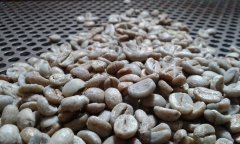
COB: a complex evolutionary history of the official grading system for raw coffee beans in Brazil
For more information on coffee beans, please follow the Coffee Workshop (Wechat official account cafe_style) cob: the complex history of the official classification system in Brazil the origin of cob sensory analysis has provided an important mechanism for pricing goods around the world since the beginning of trade. Color, smell and taste are one of many attributes used to grade a wide range of food and agricultural products.

The History and Culture of Jamaican Blue Mountain Coffee Latitha Manor
In 1717, King Louis XV of France ordered the cultivation of coffee in Jamaica. In the middle of the 20th century, the Governor of Jamaica, Sir Nicholas Nicholas Lawes, imported Arabica seeds from Martinique and began to plant them in St. Andrew. To this day, St. Andrew

The meaning of roasting and the development of roasting history distinguishing the flavor characteristics of roasting degree of raw coffee beans
First of all, let's talk about the meaning of baking. Definition of roasting: the so-called coffee roasting (coffee roasting) refers to the heating of raw beans, which promotes a series of physical and chemical reactions inside and outside the coffee beans, and in this process produces a variety of sour, bitter, sweet and other flavors of coffee, forming mellowness and hue, and converting raw beans into dark brown beans. two。 The importance of baking: in the shadow

Kilimanjaro coffee origin history and culture brief introduction
Tanzania's famous coffee brands are Africafe, Tanica Cafe, Kilimanjaro, etc., and their quality is much better than the Nespresso coffee we often drink. Tanzanian coffee has long been loved by Europeans and ranks among the famous brands. Europeans give Tanzania coffee gentleman nickname, coffee connoisseurs will be more with it coffee king blue mountain, coffee lady

A brief introduction to the Origin, Development, History and Culture of Fine Coffee beans in Rasuna Vahana Manor with strong Flavor
Although Indonesia produces so much admirable coffee, it is puzzling that local residents prefer Turkish coffee to its famous European-style coffee, which is produced throughout Indonesia (Indonesia). Java plays an extremely important role in coffee history. In the mid-17th century, coffee trees were introduced into Indonesia by the Dutch.

Indonesian coffee brief history_Indonesia three major origin introduction_Indonesia coffee which kind of good to drink not expensive?
Professional coffee knowledge exchange More coffee bean information Please pay attention to coffee workshop (Weixin Official Accounts cafe_style) In the coffee industry, there have been constant disputes about the world's three major producing areas, one is Brazil, Vietnam and Indonesia, the other is Brazil, Colombia and Africa. But in fact, Indonesia has the largest coffee cultivation area in the world, however, due to low production efficiency and production.

History of coffee development in Indonesia Origin of Indonesia
Coffee is produced throughout Indonesia (Indonesia), and Java occupies an extremely important position in coffee history. In the mid-17th century, coffee trees were introduced to Indonesia by the Dutch (some official sources believe that earlier). The first batch of coffee from Java was sold to Amsterdam in 1712. However, coffee trees in all plantations were destroyed by coffee rust in 1877
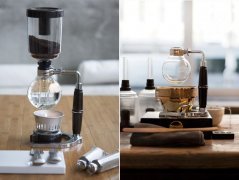
The history and usage of siphon pot
In 1840, a glass test tube in a laboratory triggered the invention of siphon coffee (Syphon). The British took the test tube used in Biya's chemical experiment as a model to create the first vacuum coffee pot. Two years later, Mrs. Bachang of France improved the kettle with a little spring in shape, and the familiar upper and lower convection siphon pot was born. Siphon coffee maker in France

The birth history of coffee roaster-Starbucks Italian roasted coffee beans
The birth history of coffee roaster-Starbucks Italian roasting coffee bean roaster, the emergence of large roasters, changed people's own baking habits, buy packaged roasted beans or coffee powder directly boiled home to facilitate the fast-paced life of modern people. In the 1960s, brand-packaged coffee beans dominated the market

History of Panama
Coffee was introduced to Panama in 1780, when Europeans brought in the first Typica species. The history of Panamanian coffee begins. For Panamanians at the time, the drink was both novel and mysterious, and not only quickly conquered people's consciousness, but also caused the locals to start growing coffee trees in general. Riding the third wave of coffee aesthetics

Common sense of Coffee Culture Coffee's "History of aggression" to Human beings II
The widespread spread of coffee in Europe around the world has also brought some problems. A large number of imported coffee beans have caused large foreign exchange losses, coupled with the threat of freedom of speech in cafes to the rule of the authorities. At that time, the rulers of European countries first adopted the way of cutting expenditure, closing cafes and banning people from drinking coffee, but coffee and cafes have become a trend and have been banned repeatedly, so they are opened.

Kilimanjaro Coffee Bean producing area Flavor description Manor treatment History
Professional baristas exchange please follow the coffee workshop (Wechat official account cafe_style) Kilimanjaro Coffee-characteristic Kilimanjaro coffee is a uniform size of large coffee beans, the color is grayish green, compared with a strong sour and sweet flavor, excellent flavor. Moderate baking will give off sweetness and light sour taste, deep baking will produce soft bitterness, suitable for

About the history of Guatemalan coffee, 8 flavors of Guatemalan coffee beans
The history of Guatemalan coffee: a cup of Guatemalan Antigua coffee seems to let us see the sudden disappearance of the mysterious Mayans multiply in the ancient land, history brushed away their existence, and history has made them forever. If a person's wrinkles depict a person's path, then the smell of coffee remembers the life experience of a cup of coffee: the wind of its hometown

The history and usage of siphon pot
In 1840, a glass test tube in a laboratory triggered the invention of the siphon coffee maker (Syphon). The British took the test tube used in Biya's chemical experiment as a model to create the first vacuum coffee pot. Two years later, Mrs. Bachang of France improved the kettle with a little spring in shape, and the familiar upper and lower convection siphon pot was born. Siphon coffee pot in France

The history of Merita filter cup what kind of coffee beans does Merita fit for Starbucks hand flushing equipment?
Professional coffee knowledge exchange more coffee bean information please follow the coffee workshop (Wechat official account cafe_style) in the current curry market popularity and acceptance of espresso. However, the rise of the boutique coffee market has undoubtedly led to a shift in public attention to a more diversified way of brewing coffee. Among them, the most important thing that can not be ignored is the emergence of coffee culture.

Siphon pot basic siphon pot history and use method
In 1840, a glass test tube in the laboratory triggered the invention of the siphon coffee pot (Syphon), and the British took Biya as a prototype for chemical experiments to create the first vacuum coffee pot. Two years later, Mrs. Baxiang of France improved the pot with a little spring shape, and the familiar upper and lower convection siphon pot was born. Siphon coffee pot in France

History and usage of siphon pot siphon coffee
In 1840, a glass test tube in a laboratory triggered the invention of the siphon coffee maker (Syphon). The British took the test tube used in Biya's chemical experiment as a model to create the first vacuum coffee pot. Two years later, Mrs. Bachang of France improved the kettle with a little spring in shape, and the familiar upper and lower convection siphon pot was born. Siphon coffee pot in France
Common sense of Coffee Culture Coffee History of Laos
Coffee in Laos has gone through a lot of development in the past 20 years. The speed of development in the past 20 years is faster than that in the past 80 years. The coffee history of Laos can be traced back to 100 years ago. At that time, France was the colonial ruler of Vietnam, Cambodia and Laos, and they began to experiment with growing various crops in these areas. Coffee was quickly found in farmers in Vietnam and Laos.